Showing posts with label Yourself. Show all posts

Thursday, February 24, 2011

Fear

I'd like to introduce you to J.S. Chancellor. If you  haven't already met her, you've been missing out! J.S. Chancellor is a good friend of mine. I met her through a review she did of my novella, Cinders, after which I discovered Rhemalda Publishing - now my current publisher.

J.S. is the author of the Guardians of Legend series. The first book of the series, Son of Ereubus, is currently availalble. The second book of the series, Blood of Adoria, will be released this fall. Also, don't miss out! In a few days J.S. will be giving away Son of Ereubus for free for the entire month of March! No strings attached. Keep your eye out. I've included J.S.'s blog information down below.

Special thanks to J.S. for guest posting here today on the Lab!

____________________________________
"In the cold, shivering twilight, preceding the daybreak of civilization, the dominating emotion of man was fear." ~Paul Harris
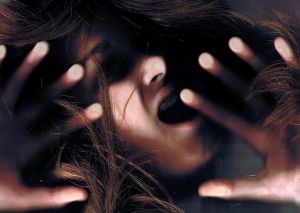
Ah, fear. Perhaps this would have been a better post for October, but alas...here we are...halfway through February.

If you've never seen the M. Night movie, "The Sixth Sense," then I'd suggest you skip this next paragraph because I'm about to ruin it for you (if you haven’t, where have you been all these years? I lurve that movie).

Bruce Willis is dead. Dead, dead. Not glittery vampire dead. Really dead. And the whole way through the movie, he's none the wiser. I happened to see this work of genius on opening night, and was blessed to gasp along with the other 400 people in the theatre with me, when the truth was revealed. As always, I relate such an experience to being an author (and a few other professions, but we'll let those folks blog about that).

I've learned valuable lessons lately; some concern the politics of the publishing industry---others involve fear---and through this, I can only come to one conclusion: I've been fearing the wrong thing.

I'm like Bruce Willis, trapsing through the story of my life, believing one thing (or another) while some larger, scarier, truth exists beyond my comprehension. It's ironic really. I read about a man in Chicago who spent his whole life avoiding planes because he feared a catastrophic crash and wound up dying in an ordinary traffic accident while on vacation with his family. Had they flown that day, instead of making the 300-some-odd mile trip, he'd still be alive (the rest of the family lived, just fyi).

As writers, we fear even admitting that we have fears. Once those fears are tapped, we fear not being able to contain them. We wrestle with how our characters explore such emotions all the time, but when it comes to our own lives...well, that's another matter. All paths are different, so I won't even try to address this topic on a specific basis...but overall, writing and fear are no more strangers than love and writing. In fact, writing is kind of a hussy 'cause she gets around quite a bit. Occasional flings with jealousy and a closet bondage kind of relationship with rage. It's a wonder she can keep track of everyone's whereabouts.

All kidding aside...I really have been fearing all the wrong things. I thought I'd feel one way about reader reviews, and I've found that my feelings differ drastically from my expectations. I thought I'd flourish under deadlines, and I don't...I flounder. At least I had the first four letters right. I also spent an inordinate amount of time wrapped up in non-writerly writing things that at the end of the day just stress me out. Why do I do this? Again...fear. Out of sight, out of mind. In a small way, it makes me want to travel back in time to the days when the internet didn't exist and writers could suffer...ahem...work in silence. The net is wonderful and necessary for networking and building relationships (so long as you are aware of all of your actions and their consequences), but it's tiring.

Tiring to the point where my muse starts to go on the hunt for mistresses. And I can't be having that...

So...the real question here is: What do you fear?

Now that you’ve answered that, let me ask: What do you really fear?
____________________________

You can find J.S. Chancellor on her blog, Welcome to the Asylum. You can also follow her on Facebook.

Thursday, February 10, 2011

Write Like a Sword-Wielding Martial Artist

Good morning! I've been super busy as we get the Notes from Underground anthology underway. The final release date is for March 1st. Let us hope and cross our fingers that this sticks. This is going to be one sweet book, you guys. You. Will. Want. To. Buy. It.

Today is a treat! One of our loyal readers and authors who will be in the Notes anthology is guest posting here today. Read this post! It's made of awesome. It talks about swords and what lies at the heart of what we should face as writers.

Welcome, C.N. Nevets!
________________________________

If you've been around the Literary Lab for very long, you've heard this message: write bravely. There are other variations, but it's a theme that comes up again and again. Over the past year or so, this has been one of the greatest challenges set before me in my own writing, and I'd like to cover some of what I have learned. I'll present these as confrontations, because I rather like the image of myself as a sword-wielding martial artist fighting against the evil hordes of my own worst bits of writing.

Confront Your Inadequacy. Try writing something you don't feel adequate to write. Challenge yourself. You can do it in baby steps, but the more times you accomplish what you previously felt you could not, the more stories you will be empowered to tell. I did this with a flash fiction piece I called, "Discipline." It's a story that's inspired by the story of my great uncle, an underage soldier in the Pacific theater of WWII. I didn't feel I could do it justice, and when I look at it I know it could have been better. But I've gotten a few precious bits of feedback that tell me that, at least for a few readers, the message got across. For me, that means it was well worth while.

Confront Your Darkness. Darkness comes in a lot of forms, but the kind that you need to confront is the internal darkness. I personally struggle a lot with writing the kind of things I do whenever I'm confronted with the reality of terrible evil. This past year, I've had more than one brush with this, including a teenage suicide and the disappearance of a good friend and his wife. The darkness you face may be less Hollywood. Perhaps you write YA romance and are suddenly uncomfortable with it because of the heartbreak your daughter goes through. Perhaps you write epic fantasy and face pressure that makes you feel guilty for dealing with fantasy rather than the real world. Some writers go a long time before facing this kind of darkness; few avoid it forever. If you face it, deal with it, and then write. It's okay to take a little time to sort through something, but there's no reason to let your writing be silenced.

Confront Your Detractors. Every writer has stories that get rejected. Often times, we develop nemeses who just plain don't like our writing and want to make a point of it. Sometimes it's just a bad comment on a single website, or an unfair review. Whether your detractors are critics or those annoying kids in your writing class, you cannot write in order to avoid their scorn.

Confront Your Supporters.
Perhaps the hardest thing I've yet done in writing was to submit, "I Need This," to Domey, Michelle, and Scott.The writing itself was risky. The voice thick and easily misconstrued in a blind reading. The topic was dark, and portions were frankly vile. The Literary Lab had shown some confidence in my writing during the Genre Wars contest, and I didn't want to jeopardize my standing in their eyes. Writers spend so much time being rejected, it can be very hard to risk losing the support of those who have accepted our writing -- but you can't write for them any more than you can write to avoid your detractors.

Confront Your Self-Image.  
What made "I Need This" extra difficult is that, within it, I crossed a few of my own lines. I wrote things I never thought I would write. I took on the voice of the kind of person whose work I had grieved when I was doing forensic anthropology. I integrated photographs in a way that felt very uncomfortable for me because of that work. Much of this would not have been hard for any of the rest of you. And that's the point: there are few things that are harder than challenging your own idea of yourself. But by doing so I threw off chains that were weighing me down.

A lot of this can be boiled down to this:

Confront Your Inside Voice.
When it comes to writing, use your outside voice. I'm not saying there's no place for restraint in language, or for quiet prose, or for still moments. What there's no place for, though, is fighting against your self and holding yourself back.

The benefits of writing bravely are many, from self-satisfaction to improved quality. Sometimes, the benefits are even practical.  I'm currently finishing up a novel, Sublimation, that I will be querying for publication. I've had to write bravely several times in the course of this work. When I posted a synopsis and a quote from the book on my website, it got the attention of one of my writing heroes, who then reached out to me to express his appreciation and support. That has been a tremendous encouragement to me -- and it could not have happened if I had not taken the leap into writing bravely.


.Nevets.


(p.s., If you care to read, "I Need This," you can do so by going to to the http://www.nevets-qst.com/">Nevets-QST website and clicking on the Websclusives tab. "Discipline" can be read at the same website, under Flash Fiction.)

Monday, February 15, 2010

Universal Foolishness

This is a little silly, but it's something I've been wanting to post about for a long time. First, I just wanted to remind everyone that our Genre Wars Anthology is now available! There's a link over to your right. I really am proud of this, everyone. I love that we get to showcase stories from several great writers and that we can also donate money (100% of our profits) to WriteGirl.

Now, on to the post.

About a year ago, a friend of mine directed my attention to this:


I started watching this and thought it would just be a good laugh. But, when the video got to the halfway point, I started to choke up. Here I was, at work on a Monday morning, and by the time the video was over I was weeping. Somehow, as silly as this video is, it managed to reaffirm all of the dreams I ever had as a writer. This video reminded me that, no matter what you choose to do, no matter how stupid it is, if you do it with passion, joy, and love, other people will be able to participate in that dream.

So often, I manage to remind myself that the stories I write are really just pointless. I'm not setting out to save the world. I'm not trying to rebel against some dictatorship like so many other writers are willing to do. I'm just writing because I love it. And, sometimes, that's enough. Sometimes, people will find my art and connect with it. Even if they see that it's foolish, they will understand that it is part of a universal foolishness, an opportunity to just let loose and feel alive.

Friday, November 13, 2009

It's Not You, It's Me

In a sort of continuation of Davin's post about sincerity and Michelle's post about honesty, I wanted to do a poll today.

(Poll closed, results below:)

Q: In your current novel, is the protagonist:

1. Someone unlike you or anyone you know? 41.5%

2. A stand-in for you, or an idealized version of you? 36.6%

3. A stand-in for someone you know, or an idealized version of them? 19.5%

4. A version of someone else's protagonist because you could write that story better than they did? 2.4%

In my last book, my protagonist was a minor character from Shakespeare's "Hamlet" that I expanded and fleshed out a lot and he's nothing like me except, of course, that he reads a lot and is obsessed by fine food. Otherwise he's a complete stranger. In my current book (titled "Cocke & Bull"), the protagonist is a gay Irish highwayman in colonial Maryland. Again, not so much me though we share Irish Catholicism but I've never killed anyone, at least.

If your protagonist is essentially you, why is that? If not, why is that? Discuss.

Friday, October 16, 2009

A Man's Got To Know His Limitations

Earlier this week, Davin posted about the idea of experts versus novices, and how they view processes and fields of learning in different ways. It got me thinking about how one indicator that we are learning our craft is when we can recognize things we don't do well. If we can see our own limits, that means we have a big enough picture of what writing is to know how well our skills fit within that picture. As we write more and grow as writers, these limits get farther out and the things we need to work on become more subtle and personal. Thinking about showing and not telling, for example, maybe becomes thinking about how summarizing a scene will impact the imagery we're using and how that will affect the long-term shape of the narrative. The concept of dialogue will evolve from ideas about breaking it up with beats and tags into ideas about, maybe, the weight of individual words and the rhythm of the exchanges and how that works with the rhythm of the book's voice.

Anyway, I am sure that every established writer, no matter how many books she has published, is aware of things she'd like to do better. Even the ones who tell you otherwise and repeat a mantra of "don't get it right; get it written." I'm not talking about perfectionism here (though it's one of my many annoying traits as a writer) so much as I'm talking about awareness of not quite getting what we want down onto the page and seeing that we ought to work harder at what we can't quite do satisfactorily.

For example, I have a tendency to sort of hedge my bets when writing. I will sometimes refuse to commit to a specific meaning in a story, by which I mean that I can't decide exactly how someone feels about a situation, so that character will talk about it in vague terms. You know they feel something but I won't tell you what it is because I don't want to decide. Decisions are hard work, and have implications for the remainder of the story, so I'll write passages that could have more than one meaning--not to be clever, but because I just don't know. I wish I'd knock that off.

I also think that I don't pay as much attention to setting and detail as I should. Mostly that's because I am more interested in character than in details, or maybe I'm just telling myself that because writing setting and detail is a weak spot. In my current book, I am forcing myself to slow down and focus more on the physical details of the fictional world, and I don't like it because I don't do it well, but my hope is that when I've finished the first draft of the WIP, I'll have trained myself to do this kind of writing better. That which does not kill me makes me stronger, and all of that.

So I'm wondering, are you aware of the current limits of your craft? Are you consciously working on them? What's the most recent breakthrough you've had in your writing?

More importantly: It's Friday! This weekend cannot come too soon.

Thursday, September 3, 2009

Noodles And The Hard Journey Inward

A few years ago, I was part of a writer's group that included a man I'll call "Noodles." Noodles was new to creative writing. He was an older man, had finished one career in engineering, and was spending his time after early retirement on writing a book. What was this book about, you ask? That is a bit difficult to answer.

Noodles got a divorce about four years prior to when he joined the writer's group. He was literally thrown out of the house with only a few boxes of things and his car. So, he decided to take a road trip, and during that road trip, he went on a personal journey of learning how to date again.

So, if you asked Noodles what his book was about, he'd say that it was about how his wife had wronged him, and how he had to learn to be romantic and charm women again at an older age.

But, if you asked anyone else in the group what the book was about, we'd say it was about a man who neglected his wife, and how, after she left him, he travelled around the country treating other women as objects.

Why was there a discrepancy? Well, that was because Noodles believed that he could hide himself in his writing and depict a more likable man than he was. And, in moments, his main character was likable and charming. But, sometimes when Noodles didn't intend it, his true view of the world peeked through, and that's because, try as we might, very few of us can keep ourselves out of our stories.

Unfortunately, this means that, writing is even harder than we thought. Not only do we have to figure out how to create compelling plots and characters, not only do we have to learn all the rules and then understand how to break them, not only do we have to sacrifice our time--we also have to delve deeply into ourselves and confront our demons. We have to know ourselves, our strengths and weaknesses, our biases, our flaws, so that we really know what we are putting on the page.

When you read, can't you tell when a writer is confident or scared or angry? Can't you tell when a writer has done her or his research on the topic, or when a writer is holding back or being completely honest? Even if we don't consciously attempt to write about ourselves, we reveal ourselves in our writing, no matter what kind of writing we do.

For me, that's one of the scariest things about writing, and one of the most beautiful parts of it. I love feeling connected, not only to the book, but also to the writer. I also believe this is why I tend to admire most every writer I've ever met. If they are even a little serious about what they do, chances are they have had to look inside themselves and understand themselves, which tends to make them more pleasant to be around.

This is just another reason why we should be proud of ourselves as writers. Often, it's more than just technique, emotion, and creativity. Writing is also a journey within ourselves, an internal cleansing that is necessary if we want to have any sort of control over these awkward things we call words.

So, if you are so inclined, take a moment and think about the character you play in your story. Can you see this character clearly? Can you see this character the ways other will?